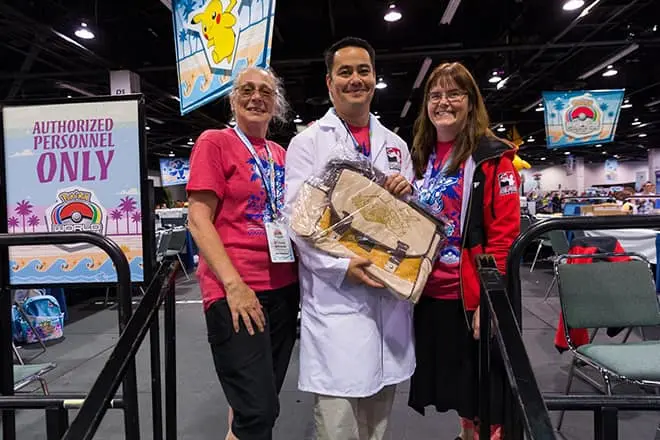
Spotlight Series #3: Michael Woitalla
There's not a lot that Michael Woitalla hasn't seen or done on his varied journey as a Pokémon Professor. This month, Sable Creech sits down with Mike to find out more about the man behind the US - North Central RPC role.
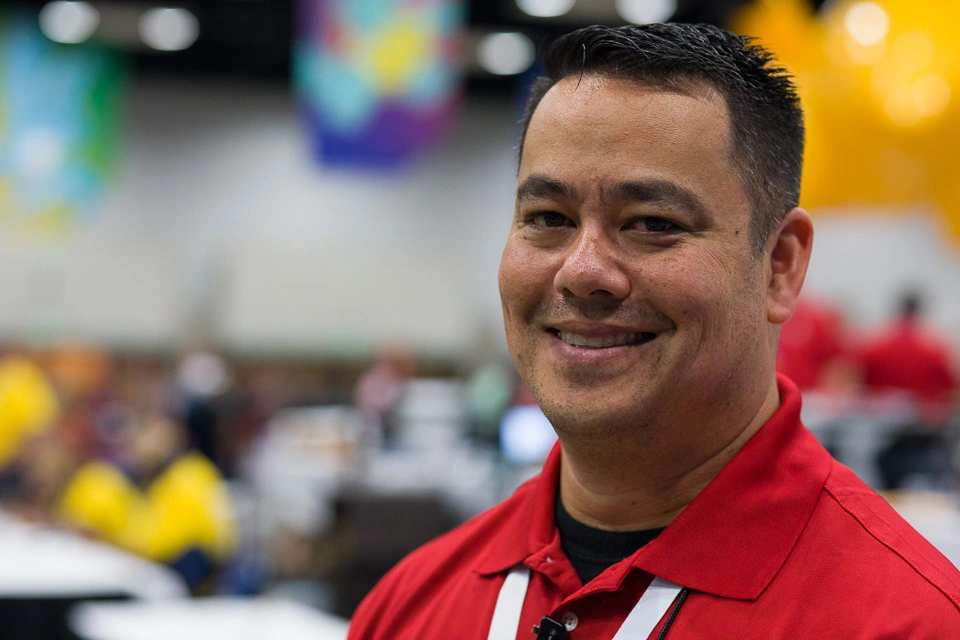
Who is Michael Woitalla?
I am a near 50 year-old man who's been involved with the Pokémon community for a while. Husband, father to three kids, all of which are grown; they’re off in college or graduated from college doing their thing.
I love technology, anything computer science, anime. I love traveling. I love food. I also enjoy peace and quiet. Sometimes after a big event, I like to recharge by isolating for a little bit and recharge some of those social batteries.
By day, when I'm not doing Pokémon things, I'm a software systems engineer. My hobbies include, of course, doing Pokémon-related things and trying to help people not only just run great events, but giving back to the community. And then – hopefully with the things that we're doing in the RPC program as well – helping Professors grow themselves.
What was your introduction to Pokémon and where did it take you?
Pokémon came out at a time where I was too old to be doing Pokémon-type things. I was off college and doing U.S. Army things. And then when I had kids, my oldest son inherited some Pokémon cards from my mom, who had run a daycare.
Our first real introduction to anything organized play or in the world of actual Pokémon was the US Nationals in Indianapolis. My wife wanted me to get the boys out of the house, and she had seen in the paper that there was a big Pokémon thing in Indianapolis, so she said, “You're taking the boys, driving down to Indy. Just get them out of here and do something.” So we drove to Indy. This was at the tail end of HeartGold & SoulSilver to the beginning of Black & White era.
We had no idea what we were getting ourselves into. There's inflatables. There's people in costumes. Whoever was running the League Play area back at the time asked me if we were playing. I said, “I have no idea what we're doing.” He said, “Well, follow me.”
And that was really the start of it. He hooked both the boys up with some packs and theme decks, and taught them how to play both VG and TCG, and how to modify their theme decks. They played through a couple of games, stood in the League line, got some swag, and then kept playing.
What I thought was going to be an hour or two turned into many hours. As we left the Convention Center with tons of product and two happy young men, I was in awe with the franchise in terms of the fun and everything, but the openness – the inviting nature – of everybody there. It was just so welcoming. To have two young kids and an old man walk in and not know what's going on, and then just be shown that level of patience and care.
So when we left, they couldn't stop talking about it. We went up and we did a Prerelease in Angola - that’s where they got their first Player IDs - and we met up with the Fort Wayne-area Pokémon group and got invited to join League. One thing snowballed after another and we just continually grew with the program.
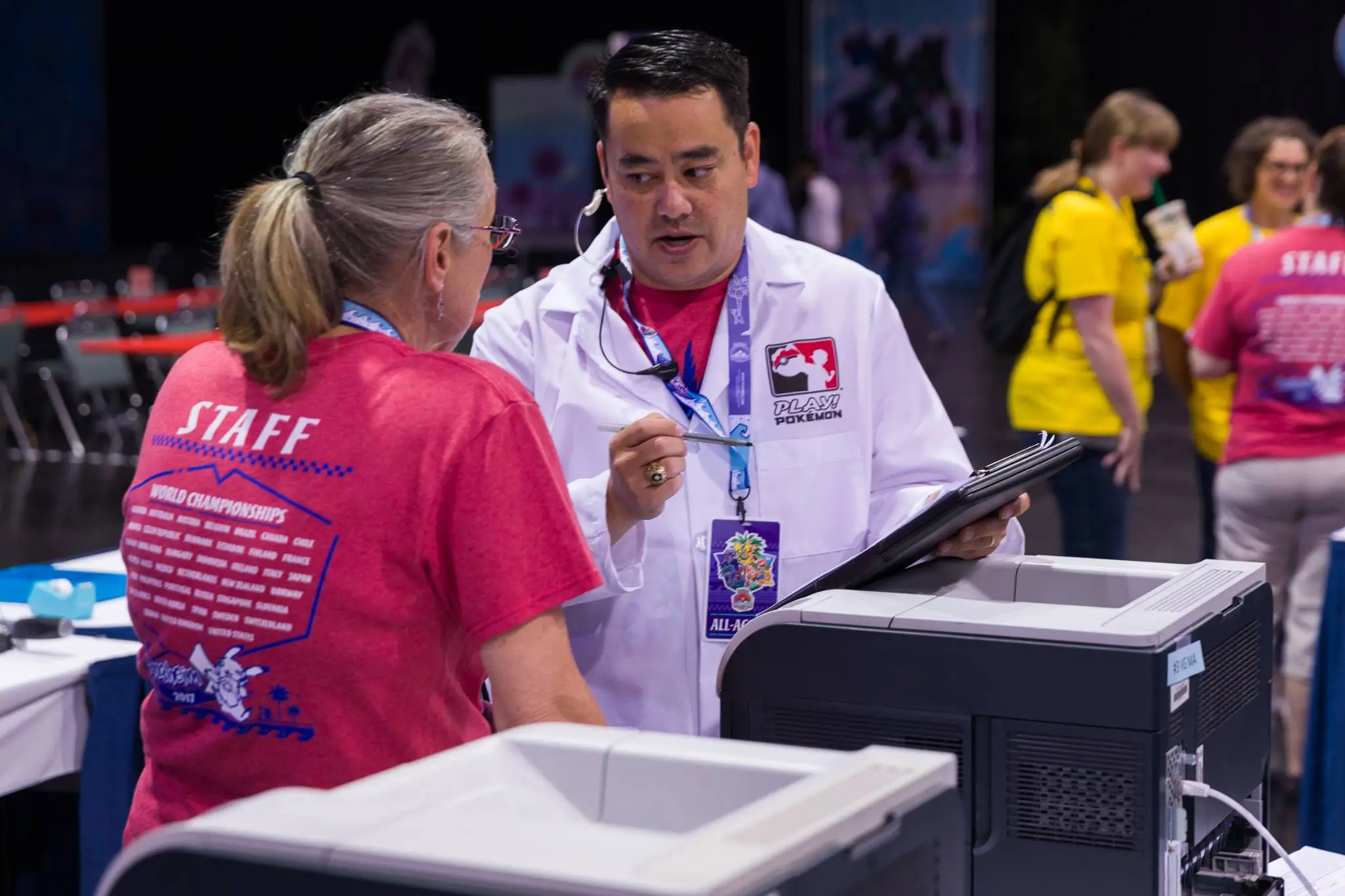
The openness of the game has had a massive impact on you. Was that the driving factor behind becoming a Professor?
100%. It was the community of this game, and wanting other people to have the same experience I had. As cheesy as it might sound, it's whatt was given to me and my family. The more active I got, the more opportunities have come up to do things and to see different aspects of this game. Every time I think I've seen just about everything, I turn the corner and get exposed to something else. And it's been great.
You have had over 13 years of experience in the game. What are some shining moments for you, either as a Poké-Parent or as a Professor?
That US Nationals trip that got it all started. I have a couple of key pictures in my phone that are in my favorites folder because the kids are cute. We had a great time. That's where it all started, right?
Two other moments were with the boys. They played competitively for quite a number of years. Connor won a Regional in Toronto, so that was another highlight for me, just knowing the work and dedication paid off. And then Jared won a Regional once. He had a blast and he did a great job, so that was another key moment beyond that.
It seems like every time I get involved with one of the larger events, I'm able to help another Professor make progress in their own personal journey. I've worked with a number of Professors who have come to me and said, “Hey, I want to be a Head Judge,” or “I want to be a lead somewhere,” or “I want to just be a better judge at XYZ,” and I've worked with them, provided them feedback and guidance, helped them explore it and try to figure out what it is they're trying to do. Those are also highlights in my experience.
Everyone is good at something. What are you good at? Where's your niche?
My niche is problem solving and leadership organization-type things.
Can I do TCG floor judging? Sure. Can I do VG floor judging? Absolutely. Can I do GO floor judging? No, no, I can't. That's still a big black box to me and one of the things I'm hoping to expand my technical abilities with. However, you can throw me at the hive, you can throw me in Deck Check, you can throw me wherever in terms of leading a group from small to large. I'm able to spot problems – hopefully before they become big problems – and try to find solutions to them.
I like to think that I'm able to help guide teams to a common goal, some willingly, some not so willingly, to get the job done.I think that's kind of been evident in the majority of the positions that I've held. When I really started focusing on the Professorship side, I fully embraced that and and tried to do the best that I could with the local community. But even before that, rolling up my sleeves and talking with the Regional tournament organizers, asking to get on staff and being involved.
As we started with US Nationals, I was just running the floor, running match slips and paper pairings, guarding aisleways, shooing people away, whatever it took. But, at the same time, always being on the lookout for how I can help the event overall be a better event. How can I help the players and parents and other staff members have a good time at that event? Always reflecting back to my first visit and trying to portray that, even if I was just a volunteer.
Then after a short season or two at the US Nationals level, I was lucky enough to start staffing Worlds. My first Worlds as a staff member was Boston. I've held roles from Floor Judge, Technical Judge for Team Check, all the way up through Video Game Tournament Lead, floor manager a couple of times.
Going back to your original question of “Where's my niche?” – my niche is problem solving and taking care of business, I guess. While judging and doing all the technical roles are still in my wheelhouse, I feel that there are tons of judges that are way better than me. But what I bring to the table is the ability to to lead those teams, whether they're judges or technical people, to make events hopefully run as smoothly as they can.
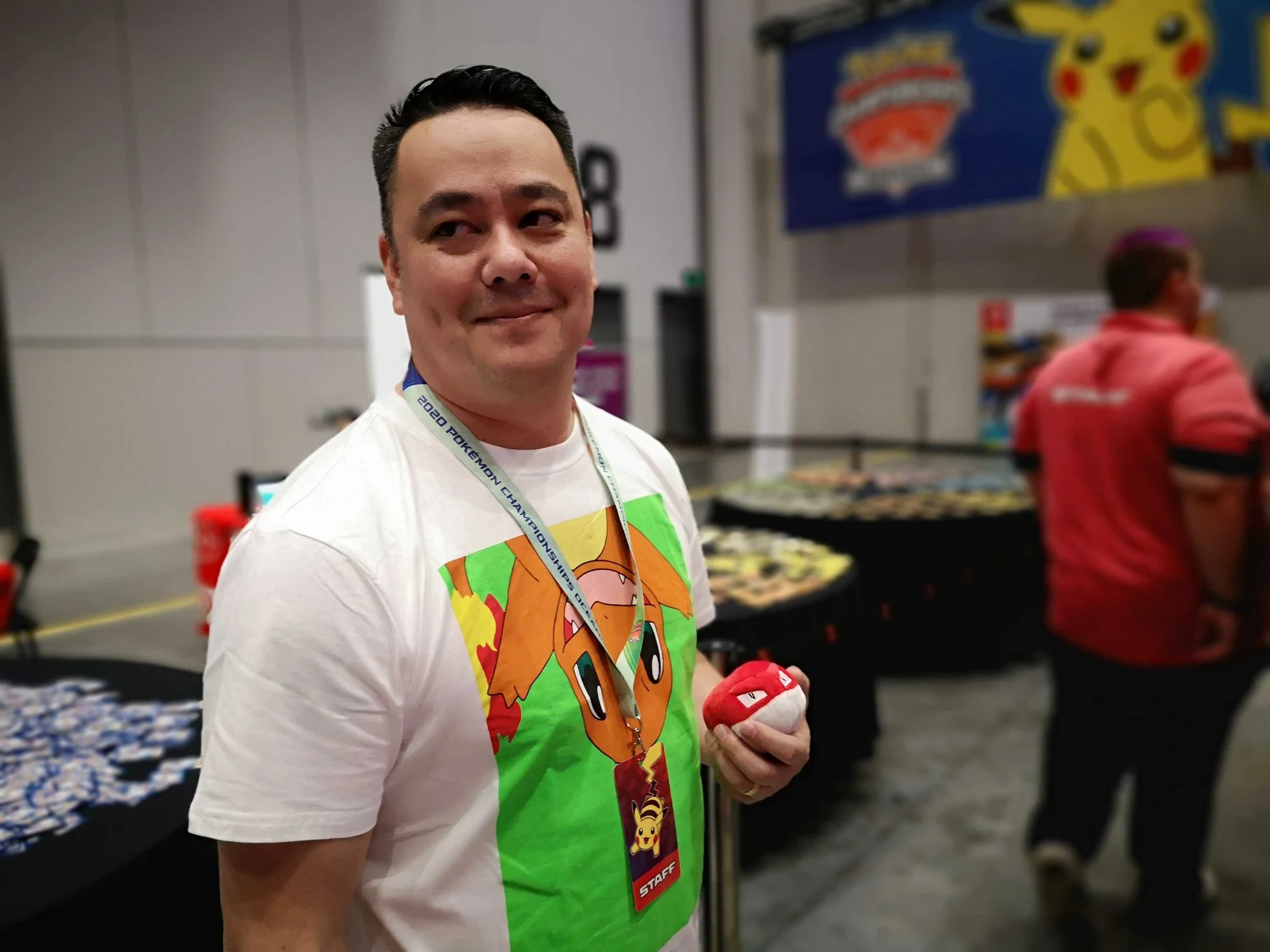
You mentioned earlier that you try to find peace and quiet after an event to kind of reset yourself. How do you find that quiet?
For me, it is finding small moments. One of the first things I typically do post-event is I disengage from social media as much as I can. That can eat up a lot of time for a number of different reasons, because you're always checking your phone or your computer. But also depending upon how the event went for you, your brain sometimes might get sucked in and dwell on things that may have not gone so well. And you don't want to have that occupy your mind 24/7. So disengaging from social media for even a couple of days typically is useful.
I also like to step back and engage in things that I also enjoy that are outside of Pokémon. Pick up some games that I haven't been playing for a while. Go for a bike ride if the weather's nice. Go to the gym. Read a book. Sit by the campfire. Those kinds of things – things that are not related to Pokémon. And then try to find some quiet time, even if it's another thirty minutes at the end of the day where you don't have a lot of things going on. And I know it could be really hard, but sometimes, you have to prioritize that.
Planning for the next big event can overwhelm you. Again, sometimes it sounds cheesy – you do have to take care of yourself. Because if you burn yourself out, a couple of things happen. Your performance goes down at those events. You begin to not enjoy what you're doing. Your hobby now becomes a chore. Your fandom becomes something that you just don't like to do. So I personally feel that making sure you don't burn yourself out is critical in how to maintain a healthy vigor for the things that you're doing.
So when Professors find themselves dealing with burnout – because it can get quite pervasive – what tips do you have for pulling yourself out of that hole?
Stop working so many events. Some people might remember I kind of took a step back from that last season, because of the time and energy they require, plus the travel cost. And good comes of that too because other people get to fill in roles that sometimes you get pigeonholed in.
A lot of times I get asked, “Well, how do I get selected for more Regionals?” or “How do I get selected for ICs?” and “How do I get selected for Worlds?” So many Professors will focus on the number of events. They say, “Well, I worked every single Regional this year,” or “I worked almost all the Regionals and I worked 2 ICs, but I didn't get a nod for Worlds.” And what I would tell people is it's okay to not work every event. What's important is that at the events that you work, you do a good job, that you pour your heart and soul into it. That's where, from my perspective, I feel people stand out. I may only see a Professor once or twice at an event filling some kind of role, but if they are super rockstars, I will remember them more readily than the Professors that I've seen at five or six different events who were just fine but not outstanding in their field.
If you're facing burnout, it's okay to step back. Because the more events you do you, you may not be putting in the quality that you need. So take a step back; take a moment to reflect. Take the opportunity to play the game that you like to be in. I am absolutely hot garbage at TCG, but I enjoy playing it. If I'm not staffing a Regional, I try to play in one. It's been a while, but I'm actually kind of looking to see if there might be one that I want to play here coming soon. And honestly, even though I do mostly VG things, I actually find more joy in playing the TCG.
So, for the burnout question: slow down, take a step back if you need to, and re-engage with the game from a different perspective. Take on a different role at an event, or even play.
One of the other things is to take on a different role that you think you might like as well. Make it known that you want to do something and pursue it. I got the opportunity to be TOM Operator at one of the Regionals, and it was great. I actually had a blast. So always, always communicate your desires, and then chase your dreams.
Do you have any closing remarks before we wrap things up?
As the RPC for the North Central region, I am amazed every day at the Professors in the region and around the world, honestly. I mentioned earlier, there are tons of judges who are phenomenal, and I can't say thanks enough. There are tons of Professors who do some wonderful things with their leagues and with their stores and with their communities. And then they do a great job of doing the migration or the cross-pollination between the different games. Somehow they get all the GO people to show up at a different League event and vice versa. I feel truly lucky to be involved with that group.
It's hard to keep up with everybody, though, and so with the launch of ProfCOM, with the directories and the forums and the ability to reach out to the RPCs, I have been getting more contact here recently from individual Professors and Leagues. I want to encourage people that there is another avenue here to reach out to me. Send me that email. You can find the contact information on the Professor directory. Send me a DM in Discord or Messenger. If you see me in an event and my hair’s not on fire doing something, stop and say hi.
We are not part of TPCi; we don't have TPCi powers, so I can't magically fix things for you. But I can talk to you about issues. I can provide you some thoughts, feedback, guidance. And I'm glad to do that.
As you astutely mentioned, I've been around the block a time or two. Even if we look past the Pokémon experience, I'm nearly half a century old, so I have a lot of life experiences too. I like to apply some of those types of things to the way I approach leadership and team things. So if you have questions, and even if it's just a simple question, shoot me a note. If you have a complex question, same thing. Reach out if you want to engage in a mentoring type of relationship too. I'm here as well. And if there's something not in my wheelhouse, I will try to help you find somebody to help you with your challenges.
But I also like to hear about the good things too, right? There are things in place that allow us to help share those ideas and recognize people and leagues who are doing well. And so we're always on the lookout to help share those good stories as well. So, good or bad, reach out.