

Professor Conference Minneapolis: Event Report
The first Professor Conference in North America since 2019 is in the books! Scores of Professors from around the continent gathered in Minneapolis for a day of Professor Seminars followed by a day of competition at the Professor Cup. Just like players put together event reports for tournaments, I’ve put together an event report for the Conference!
Day 1: Professor Seminars
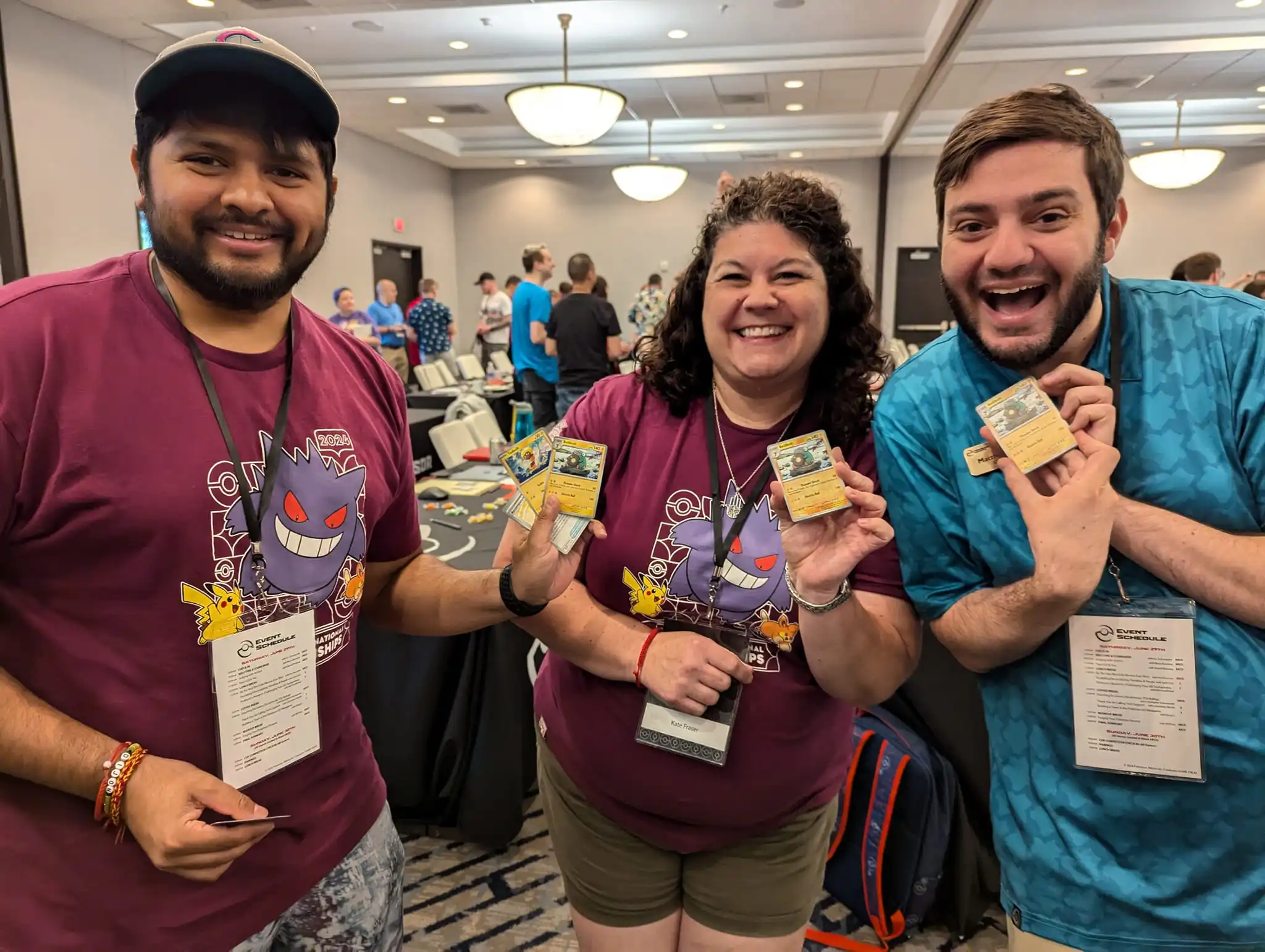
After a healthy breakfast to start the day, the Conference kicked off with a fun icebreaker activity: everyone got a Scarlet & Violet—Twilight Masquerade booster pack, and our goal was to form a group of 4-5 Professors who had a matching card in their pack. Everyone scrambled to find common cards, sometimes forming groups of 2-3 only to disband and regroup if they couldn’t find more Professors with that card. Our group formed pretty quickly (#BelliboltBuddies), so we spent most of the time helping those who didn’t have a group find one.
Once in our groups, we discussed how we got started in Pokémon, our journey as Professors, and which Professors helped us along our journey. Our group was a neat mix of Professors who have never been to events beyond their local store (until now, of course!) and Professors who have been involved in the game for over a decade – it was great to hear so many different ways of being a Professor!
The first Seminar of the day followed next, which was a presentation by Becca Rountree about judging with autism. The talk covered both tips on how to handle social situations that may be uncomfortable or unfamiliar for autistic individuals as well as how to help and support autistic Professors and players at events. While I don’t have autism (or at least am not diagnosed), I’ll definitely be making use of a lot of the advice shared, especially regarding eye contact, as I’ve always struggled with this. And of course, understanding the different communication needs for autistic individuals is going to help dramatically, especially when communicating event information to my local players.
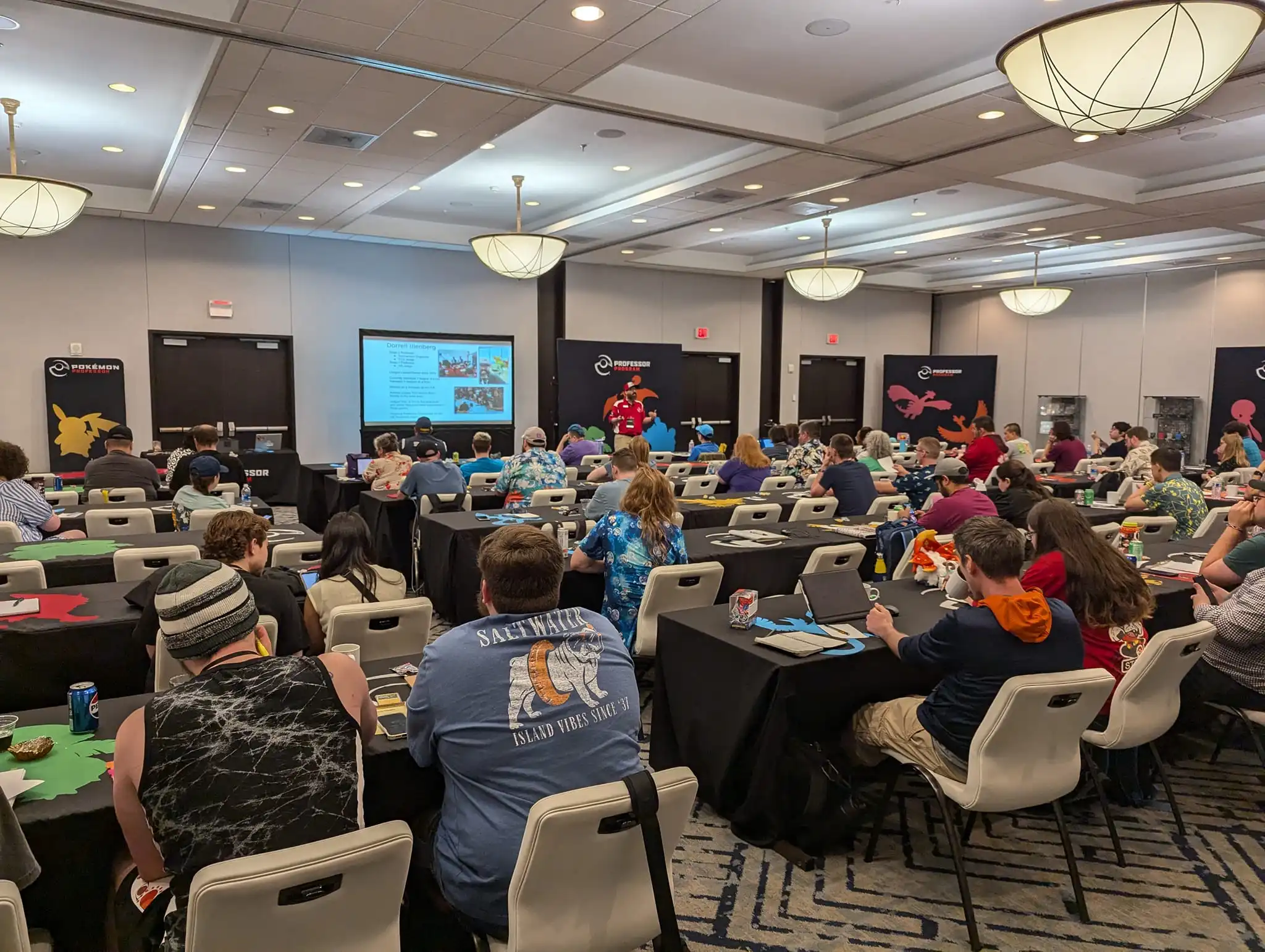
Next up, Darrell Illenberg hosted a Seminar about Professor/LGS (local game store) relationships, including best practices when communicating information to players and how to approach starting a new League. With the switch for VG from Organizer-based to League-based, the timing of this was perfect, as so many new Leagues are being formed and so many existing Leagues are starting to run new events (and often welcoming new Judges/Organizers for these events!). Having just helped a few local Leagues start running VG and Pokémon GO League Challenges and League Cups, one aspect of Darrell’s talk really rang true: there’s no one-size-fits-all approach! Every store is different, so while one store may be immediately excited to run VG and Pokémon GO events, another may need to first understand how the events will help their store grow. Similarly, every player community is different, so while one League may do great with using a Facebook group for communication, another may find that a Discord server works better for them.
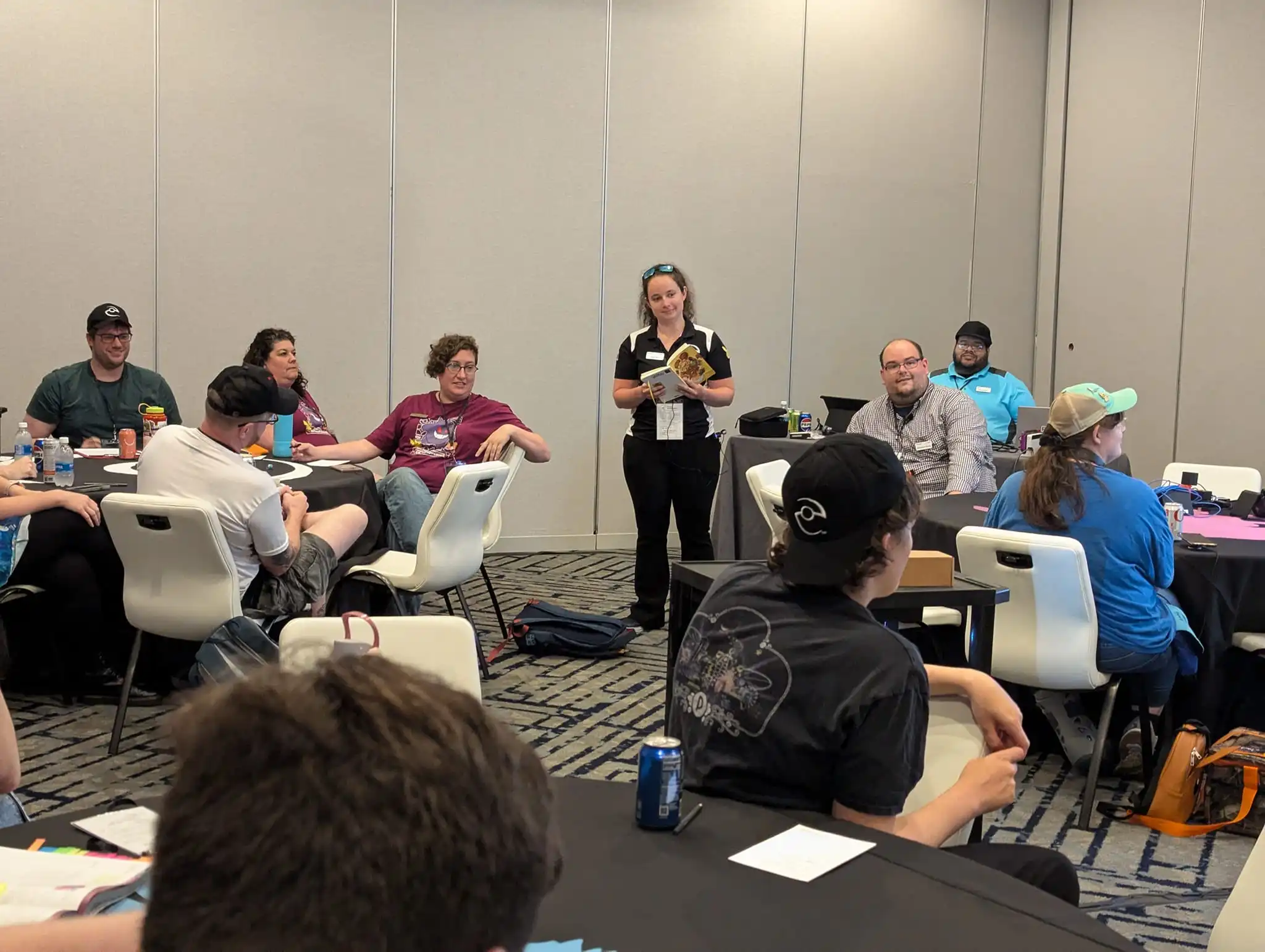
Following a break for lunch and a quick Kahoot session to share tips for making a successful League, we had the choice of three different sessions: a presentation by Ives Rountree about improving judge skills, a talk by Sydni Sich about escalating and de-escalating penalties, and the session I chose, a demonstration by Mel Goodfriend of tools used to run Pokémon GO events. While I’ve had lots of familiarity with running Swiss with Single Elimination through TOM, I’ve had very little experience with using Challonge for Double Elimination, which is used for Pokémon GO at Regionals and above, so was grateful for the opportunity to learn how it works. It’s really neat that you can preset what table a match will be at, so if a player is waiting to find out who their opponent will be, you can tell them which table to go to in advance.
The next Seminar was also a choice of three: challenging rulings in TCG with Christopher Schemanske, VG tech troubleshooting with Johnathan Neville, and Pokémon GO metagaming and team building with Kieng Iv. Continuing with tech-focused seminars, I chose Johnathan’s presentation, which was very interesting! I’ll be able to take a lot from this talk back to our local judges, such as pros and cons of different connection methods, why Casual Battle should be chosen instead of Ranked Battle when electronic team checking (don’t wanna accidentally cause a temporary ban!), and the various reasons disconnects can occur.
To round off the day, everyone joined back together for the final Seminar of the day: “Forging Your Pokémon Persona” by Will Post. He went over why networking with other Professors at events is useful for self-growth and different ways to network and communicate. And as is often mentioned, he reminded us that Professors are Professors even when not staffing a tournament, so representing yourself well outside of events, especially on social media, is key as well.
That wrapped up Day 1 of the Professor Conference! I headed over to Mall of America with a few of my local Professors for dinner, where we ran into some Minneapolis area Professors who had the same idea. We also found a Japanese import store, where I bought a cute Bellibolt Pokémon Kids figure as a little memento of the morning’s icebreaker activity.
Then, it was back up the Blue Line to my hotel to rest up for the next day’s Professor Cup!
Day 2: Professor Cup
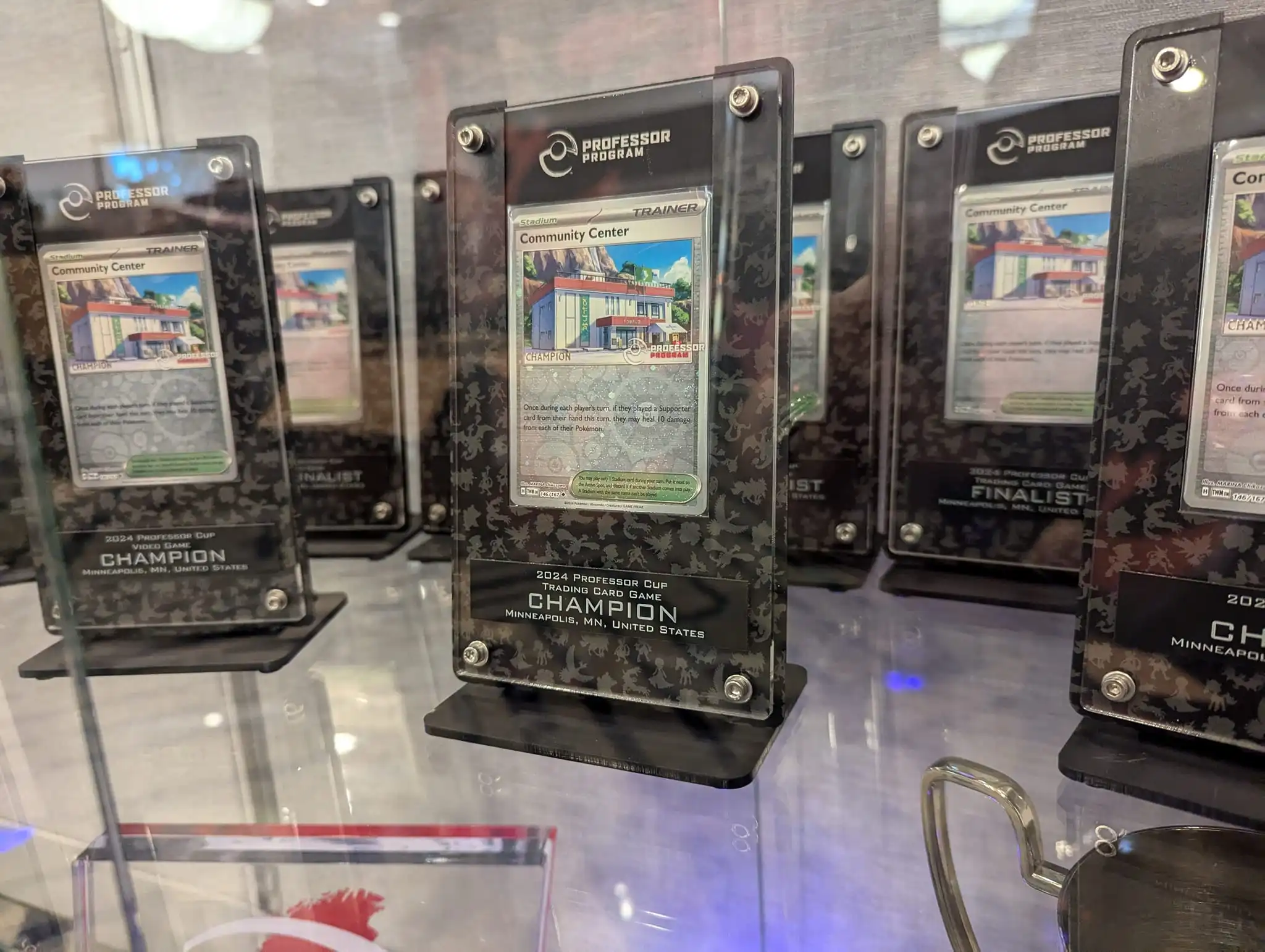
We started off with breakfast again, along with quite a bit more socializing with other Professors than the previous morning – partially as people finished building their decks/teams for the tournament!
Each game had an alternate format from the usual ruleset, so there aren’t many deck/team lists online that can be used for inspiration. Instead, many Professors worked with their local players to determine decks/teams that could work well! I, on the other hand, went in blind – while placing well would be cool, I wasn’t going into this thinking that I had any chance of winning it, so just wanted to have fun and not stress over my deck/team.
For TCG, decks were Standard-format 40 non-Rule Box cards plus a "Leader" Rule Box Pokémon. Once per game, an attack of the Rule Box Pokémon can be used as a VSTAR Power, and any other attacking Pokémon must share a type with the Leader. No more than 3 of a card could be used (other than Basic Energy), and Iono and Roxanne were banned.
For VG, each Pokémon needed to have a Physical move, a Special move, a Status move, and a self-KO move (e.g. Healing Wish, Explosion, etc.). Regulation F was used, with the exception of banning Flutter Mane.
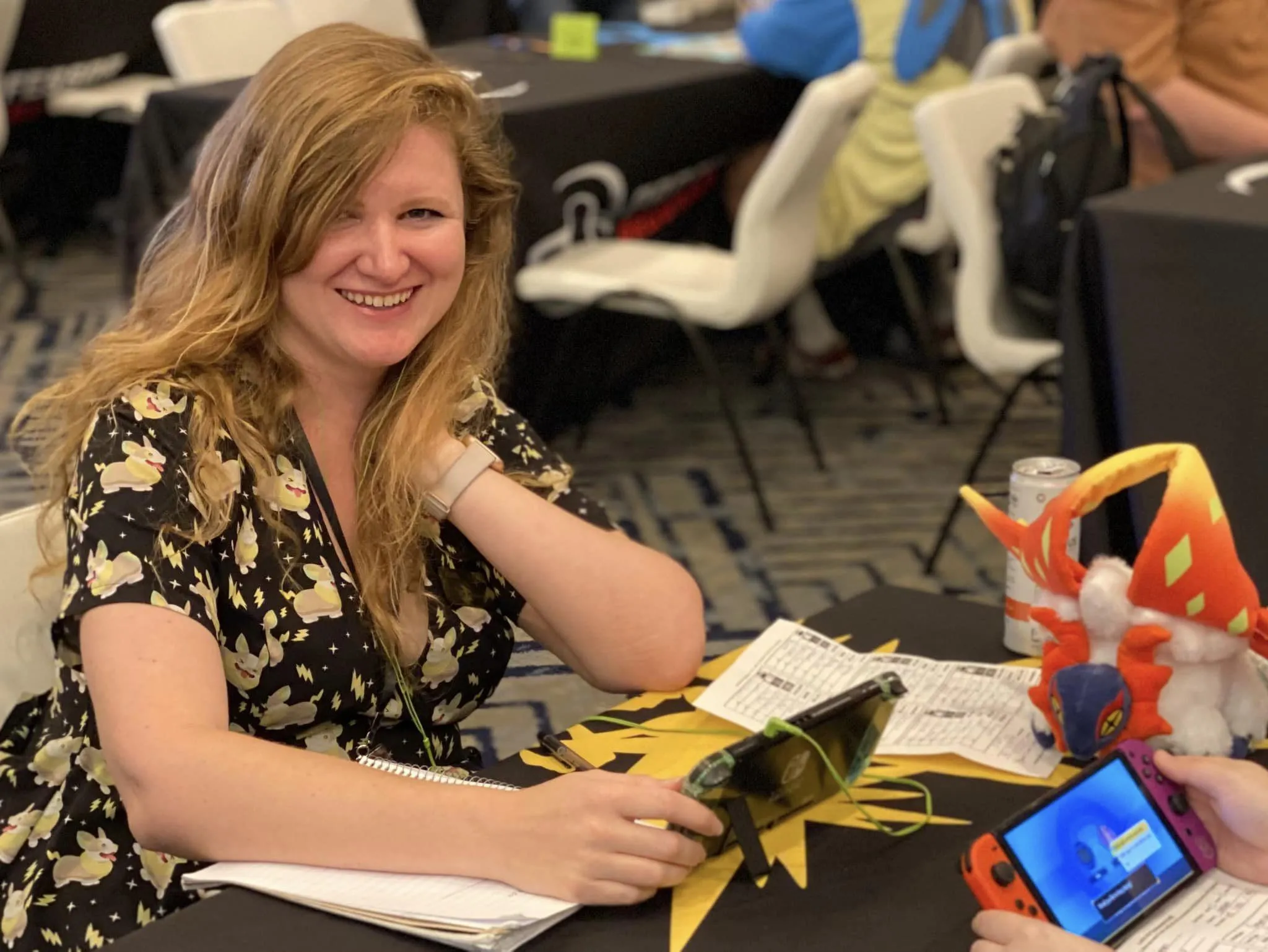
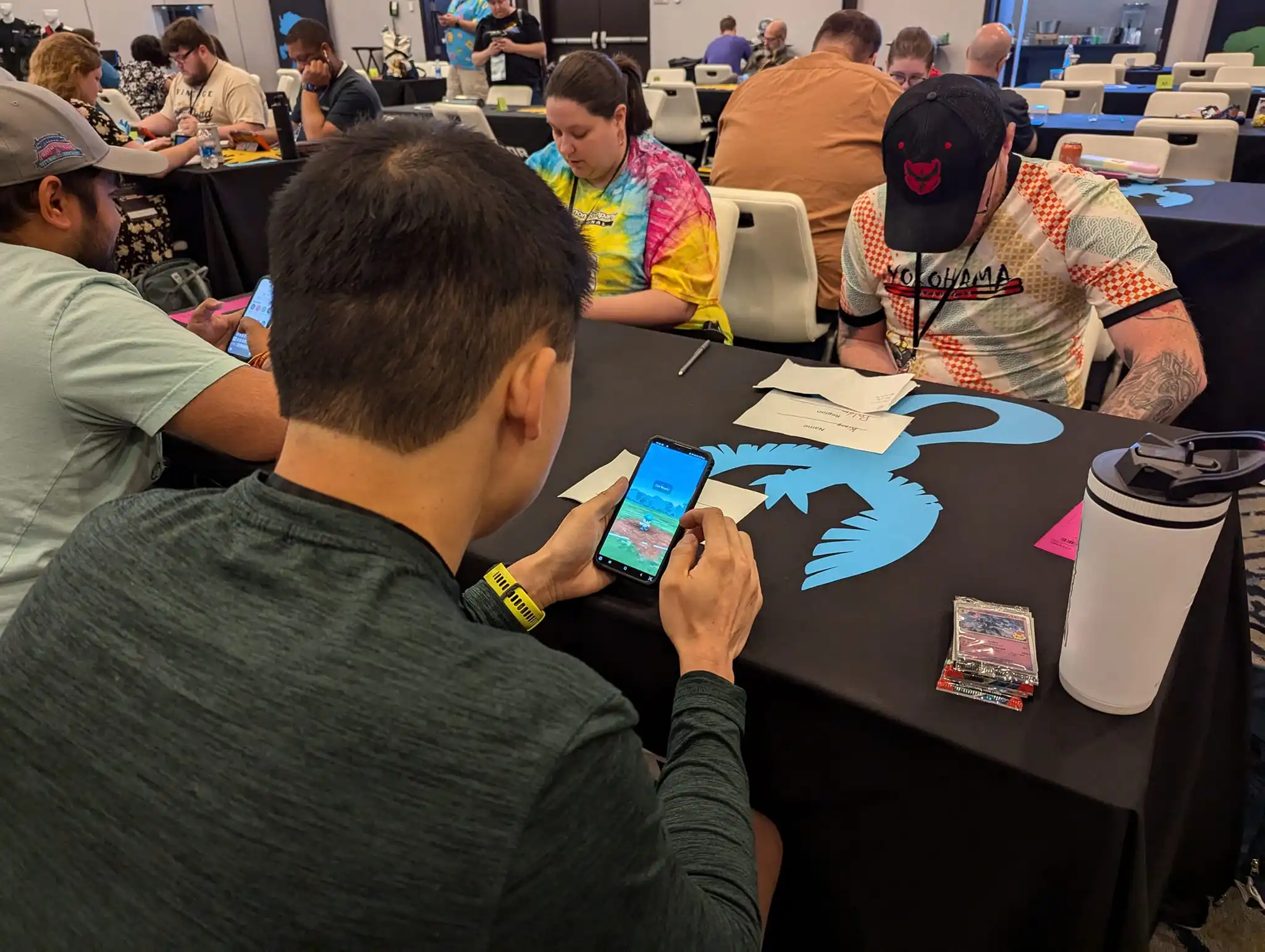
For Pokémon GO, which I decided to compete in to get more familiarity with PvP, First Partner Pokémon were the star of the show in a Little Cup format - 500 CP or below, unevolved Pokémon only (Shadow Pokémon and Best Buddy bonuses were also not permitted). At the start of the tournament, each player spun a wheel to determine which region's starters they would be using - all main series regions including Hisui were possibilities (other than Galar, since they’re not yet available in-game), as well as the possibility to spin into "choice" where you could choose your region. Once your region was decided, you had 30 minutes to catch/trade/train your Pokémon.
I managed to get the "choice" option and chose Johto, as it and Paldea were being discussed as the best regions for the format. While I had at least one of each starter that were eligible to compete, I still wanted to trade with others to try and get better stats, as my best Chikorita and Totodile were less than ideal. After a few trades (and some new Pokédex entries for those I traded with, after trading away some regional-exclusives), I got a team that I was comfortable with. I powered up my Pokémon to as close to 500 CP as possible without going over, and before I knew it, round 1 was about to begin!
Round 1 – vs. Kieng (Paldea): Right off the bat, I was paired against Kieng, who was the champion of the 2019 Pokémon GO Invitational, a Worlds qualifier, and just presented the previous day about Pokémon GO teambuilding and metagaming. Needless to say, he easily won our matchup (though I did take a game!). Afterwards, though, he gave me some suggestions on what move changes I should make, as we were allowed to change moves between rounds for this tournament. I had totally forgotten about moves! After making a few changes, notably changing Chikorita’s Charged Attack to Body Slam, I felt more confident going into Round 2.
Round 2 – vs. Amy (Paldea): My next round, I faced Amy, a Professor I’ve staffed quite a few Championship Series events with before. Neither of us were very skilled or competitive in Pokémon GO, so it was a very relaxed set of games. While there were a few close calls, I managed to win each game of the set, bringing up a winning match slip for the very first time in a Pokémon GO tournament.
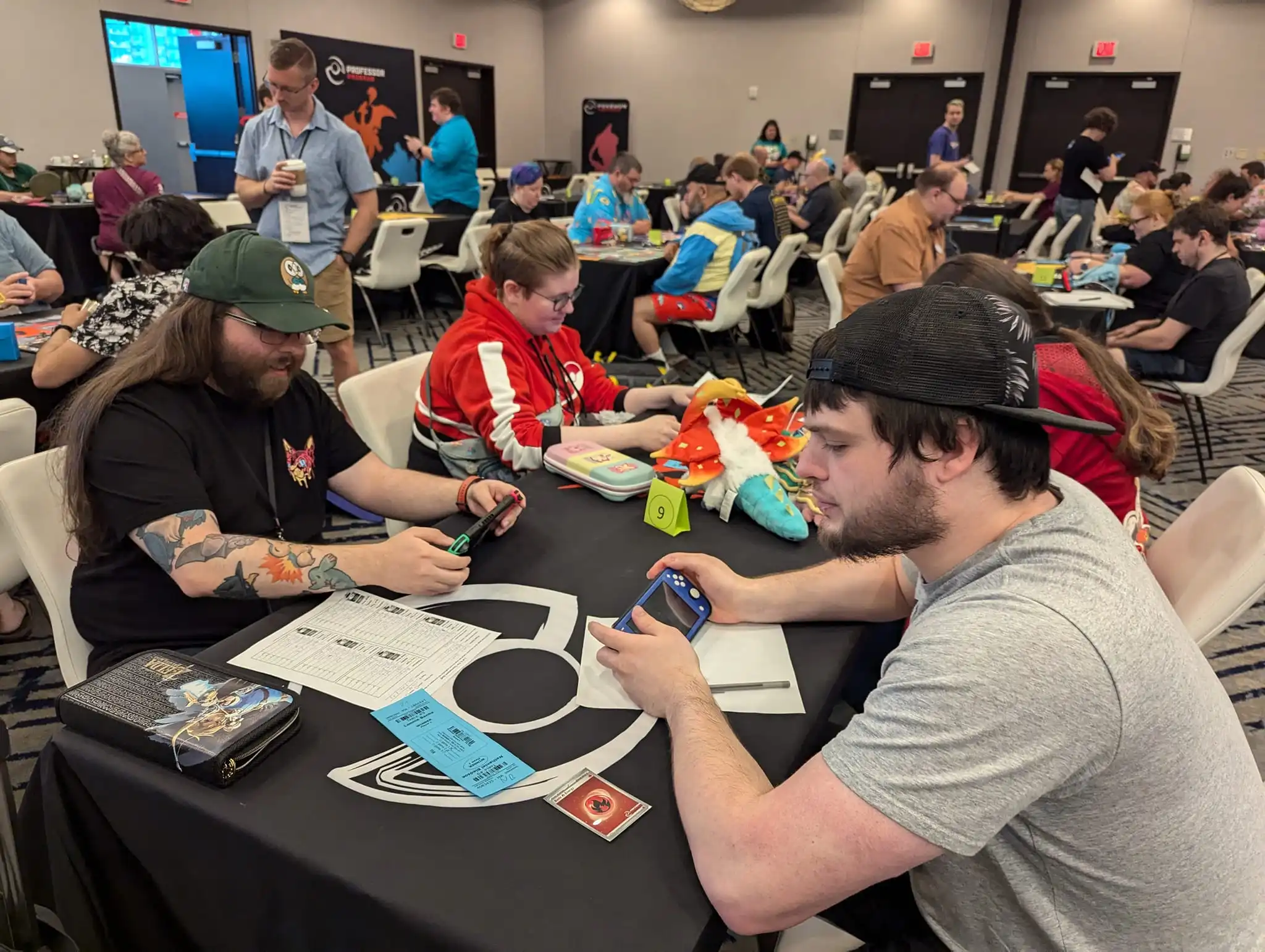
Round 3 – vs. Colton (Hoenn): I’ve known Colton for quite a few years now, so it was really fun playing against someone I knew well. He may argue I knew him too well, though, as I entered almost every game with a type advantage! Ultimately, winning the starting Pokémon “rock-paper-scissors” most games helped me win out overall, bringing my record to 2-1 with one round left in Swiss.
Round 4 – vs. Mel (Sinnoh): Ending Swiss against TPCi’s Esports Manager for Pokémon GO was both fun and stressful. Guess it was time to put what I learned in her session on Saturday to work! This was my only round of the day to go to a full five games (oh yeah, we were doing best-of-5), and the last game was an absolute nail-biter. We both started out with our Fire-types, knocked each other out almost simultaneously, and kept with parallel types for most of the game. Changing Chikorita’s Charged Attack to Body Slam in Round 1 helped bring Turtwig’s HP down just enough where, even once Chikorita got knocked out, I was able to come in with Totodile to finish off Turtwig and Piplup to win it out.
Somehow, I ended Swiss 3-1, which meant I had a chance at making top cut! Unfortunately, as the other matches were wrapping up, we realized that there would be one player at 4-0 and four players at 3-1, meaning one person would end up “bubbling” out of the top 4 cut. Opponents’ win percentage didn’t end up in my favor, so I ended up in 5th place – but still had a bunch of fun, and was excited that Shivam, one of my local judges, made it into cut!
Closing Thoughts
Altogether, the Minneapolis Professor Conference was an amazing event. I learned so much during the Professor Seminars on Day 1, and learned even more throughout the Professor Cup on Day 2. Shoutout to A.J. Schumacher and the entire Round 3 Events team for organizing all the logistics for this event, and thank you to all the presenters for spending so much time putting your talks together to help other Professors improve their skills!
Written by Matthew Verive