

A Professor’s Journey: How Pokémon Gave My Son His Voice
by Matt Morse
Green Rank Professor - NC, United States
I can vividly remember waking up one random Tuesday morning and flipping on the TV to scan for cartoons before school. At 06:30 am, the classic intro theme song of Pokémon started, the drums thumped in, and my life changed for the better. I woke up every morning after that to catch the latest episode and actually looked forward to Mondays so I could watch the next installment, even if I had to wake up extra early on school days. It was a different era, where you couldn’t binge watch a series in one day or read spoilers online.
It was new, exciting, and an entirely foreign universe that spurred young imaginations.

Pokémon played a huge role in my childhood, but I honestly never really gave it a second thought until our son latched on to it as quickly as I did. He is one of many kids born during the COVID-19 outbreak and raised in the pandemic era. A few months after he was born, COVID-19 hit the US and we sheltered in place for years. At his two-year annual checkup, the pediatrician was concerned with his speech production and recommended we have him evaluated.
The end result concluded that he did show signs of delays that were linked with speech deficiency. He started speech therapy at two and a half years old and has one of the best therapists that remains one of his biggest advocates.
As my son Roland grew older, he showed signs of modest improvements and as he developed, he grew out of the Blippy and Paw Patrol phase and began to show interest for something more complex. This led me to an impromptu Netflix brainstorming session and what I stumbled across at the time was Pokémon. The first season was available in its entirety at our disposal! Not only was the show age appropriate, I reassured myself, but I assumed that it would teach him valuable lessons about caring for your friends and how to be “the very best”.
As his enthusiasm quietly grew at home, it came to a head during one of his weekly speech sessions. Roland noticed a stack of cards sitting on the therapist’s desk. From there, it became his weekly reward; he would get to choose a couple of cards from the stack if he had a productive and responsive session.
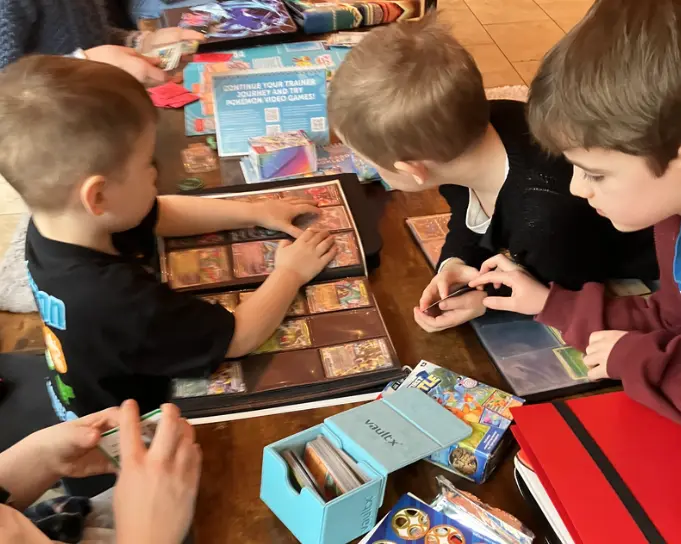
As I noticed how stimulable he was with the Pokémon TCG cards, I decided I would use it as an opportunity to practice with him at home and also bond with him in my knowledge of Pokémon. Every chance I got, I would take a card and read it out loud. He would do his best to repeat it and correctly pronounce it.
While not every attempt was perfect, it became a fun game for us to talk about Pokémon and give him more opportunities to pronounce multisyllabic names and correct his ongoing tongue thrust.
As his passion for Pokémon started to evolve and products became harder to find on the shelves, I decided to teach myself how to play TCG so that we could do more than just collect. I wanted to be able to teach them other lessons like strategy, reinforce the importance of reading and math, sportsmanship, memorization, and patience.
Eventually, I decided to take him to our local Play! Pokémon League to see if there were other kids his age and as an opportunity to play for packs. At first, there were not a lot of younger kids that attended or even knew how to play. I eventually kept bringing my son to Pokémon League nights and we started attending Prerelease events, where we met a wide range of attendees that he would share his Pokémon passion with.
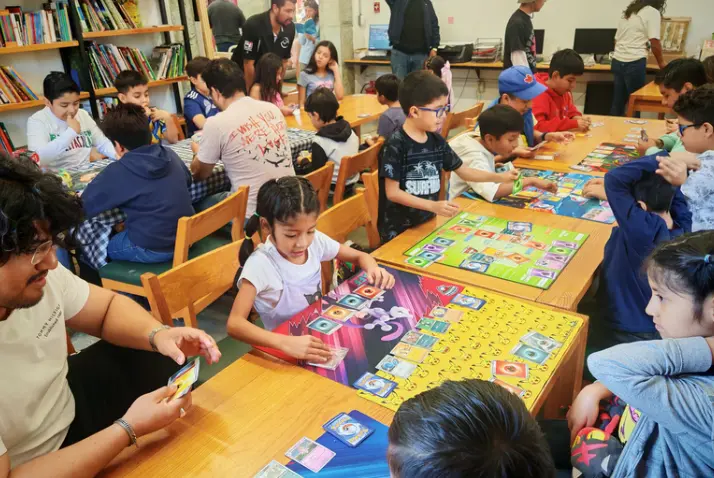
By far, Prerelease events are a perfect environment to bring Junior players so that they can practice a variety of skills in an inclusive environment. Since every player is similarly limited in the deck building guidelines, it makes the competitive factor far less intense. 40-card decks are much easier for young players to manipulate; it is easier for smaller hands to handle, and the games are generally shorter to maintain their attention.
I normally instruct junior trainers to pre-"shuffle" their decks with a pile "shuffle", and this helps them work on the basics. I then have them move on to hybrid overhand faro shuffle, which requires practice as it takes experience and the quality sleeves to keep the process smooth. This is great occupational therapy for kids that may need additional practice with hand eye coordination and hand dexterity.
His enthusiasm for deck building and “battling” eventually led to my curiosity of becoming a Pokémon Professor. I wanted to be able to teach anyone interested in playing and give my community a safe place to socialize while sharing their mutual interests in Pokémon.
As a Professor, it is rewarding to be able to instantly bond with someone that may not have the social skills to interact with strangers. Pokémon is the bond that is able to overcome many deficiencies.
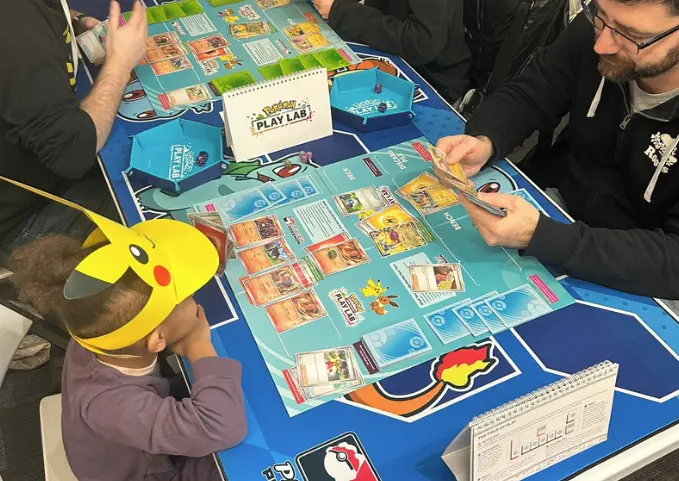
My son recently turned six years old and gives me a run for my money during our practice sessions. If he is not waving a freshly sleeved deck in my still-sleeping face, he is kicking down doors to tell us what Pokémon he just caught on the Nintendo Switch.
He has the confidence to walk up to a stranger and tell them with perfect articulation all of the legendary bird Pokémon and extends his right hand after every match to tell his opponent good game, win or lose. Though he was born in an era of isolation, Pokémon has not only helped our son gain his voice but also given him a vast community that he loves to be a part of.
I am proud to be a Professor guiding him along on his journey.